

Research on Copper Foil Tensile Testing
Abstract : This article introduces the use of the Kunpeng BOYI 2025 electronic universal testing machine and pneumatic foil-specific fixtures to perform tensile tests on copper foil samples, referring to standards such as "GB/T 5230-1995 Electrolytic Copper Foil Tensile Strength, Elastic Modulus, and Elongation at Break Test", "SJ/T 11483-2014 Electrolytic Copper Foil for Lithium-ion Batteries", "YB/T 4334-2013 Metal Foil Room Temperature Tensile Test Method", and "GB/T 29847-2013 Copper Foil Test Method for Printed Circuit Boards". The mechanical properties of copper foil, including tensile strength and elongation at break, are evaluated.
Keywords BOYI 2025 Precision Universal Testing Machine, Copper Foil, Tensile Test
Lithium battery copper foil, as the negative electrode current collector of lithium batteries, accounts for 5%-8% of the battery cost and is an important lithium battery material. Copper foil serves both as the carrier of the negative electrode active material and as the collector and conductor of electrons in the negative electrode. Therefore, the tensile strength, ductility, density, surface roughness, thickness uniformity, and appearance quality of electrolytic copper foil greatly affect the manufacturing process of lithium-ion battery negative electrodes and the electrochemical performance of lithium-ion batteries.
Copper foil is an ultra-thin copper strip or sheet with a thickness below 200μm. Thinner copper foil in lithium batteries helps improve battery energy density. Copper foil can be classified by thickness into thick copper foil (>70μm), conventional copper foil (18-70μm), thin copper foil (12-18μm), ultra-thin copper foil (6-12μm), and ultra-thin copper foil (≤6μm).
Copper-clad laminates and printed circuit boards have become essential main components in most electronic products. Metal conductor foils are conductor materials used in flexible copper-clad laminates, including copper foil, aluminum foil, and copper-beryllium alloy foil. Currently, most use copper foil, including electrolytic copper foil (ED) and rolled copper foil (RA). Copper foil is an important material for copper-clad laminates (CCL), printed circuit boards (PCB), and lithium-ion battery manufacturing.
Copper foil thickness is usually several tens of microns and is commonly used on rigid and flexible copper-clad laminates and printed circuit boards. Rigid boards require mechanical strength to provide support; copper foil on flexible boards is often used in bending, folding, and winding states, where mechanical strength is especially important. In recent years, due to the development of curved screens and foldable electronic products, the usage range has expanded and frequency increased. In the future, copper foil will develop towards fewer defects, higher smoothness, greater strength, better ductility, and thinner profiles.
This report refers to national and industry standards for tensile testing of copper foil samples. The GB standard requirements are:
1. Testing machine with a range of 1kN and accuracy class 0.5 for tensile force;
2. Sample width of 13±0.1 mm, length approximately 200 mm strip samples;
3. Initial distance between fixtures of 50±0.1 mm, test speed of 50±10 mm/min.
4. Evaluation results: tensile strength and elongation at break.
1. Experimental Section
1.1 Instruments and Fixtures
BOYI 2025-001 Electronic Universal Testing Machine
500N Pneumatic Foil-Specific Fixture
1.2 Analysis Conditions
Test temperature: room temperature around 25°C
Load sensor: 1000N (class 0.5)
Test speed: 50 mm/min
Fixture distance: 50 mm
1.3 Samples and Treatment
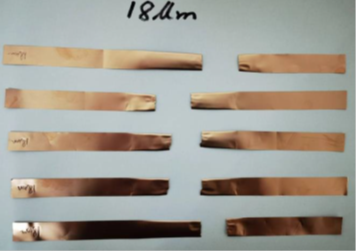
In this test, six groups of copper foils with different thicknesses from major domestic copper foil manufacturers were selected (strip samples of 200×13 mm). Each group tested 5 pieces. Table 1 shows the sample information.
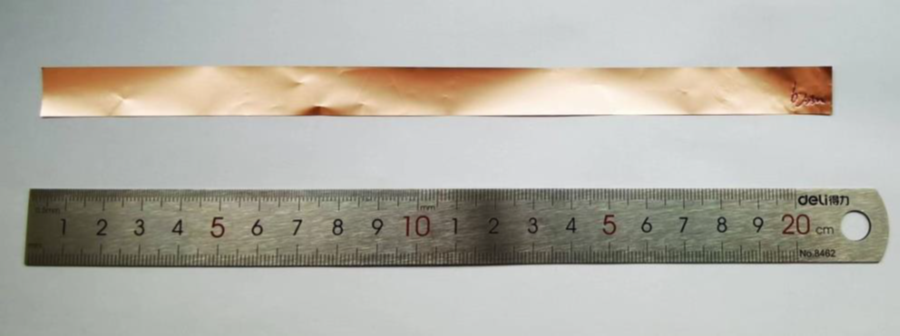 Figure 1. Copper Foil Sample Image
Table 1. Sample Information
| Sample |
Lithium Battery Copper Foil |
||||||
| Sample Name |
1 Copper Foil Group |
2 Copper Foil Group |
3 Copper Foil Group |
4 Copper Foil Group |
5 Copper Foil Group |
6 Copper Foil Group |
|
| Thickness |
6.1um |
12um |
13.8um |
16.8um |
31.2um |
64.8um |
|
| Width Fixture Distance |
13mm 50mm |
13mm 50mm |
13mm 50mm |
13mm 50mm |
13mm 50mm |
13mm 50mm |
|
2. Test Introduction
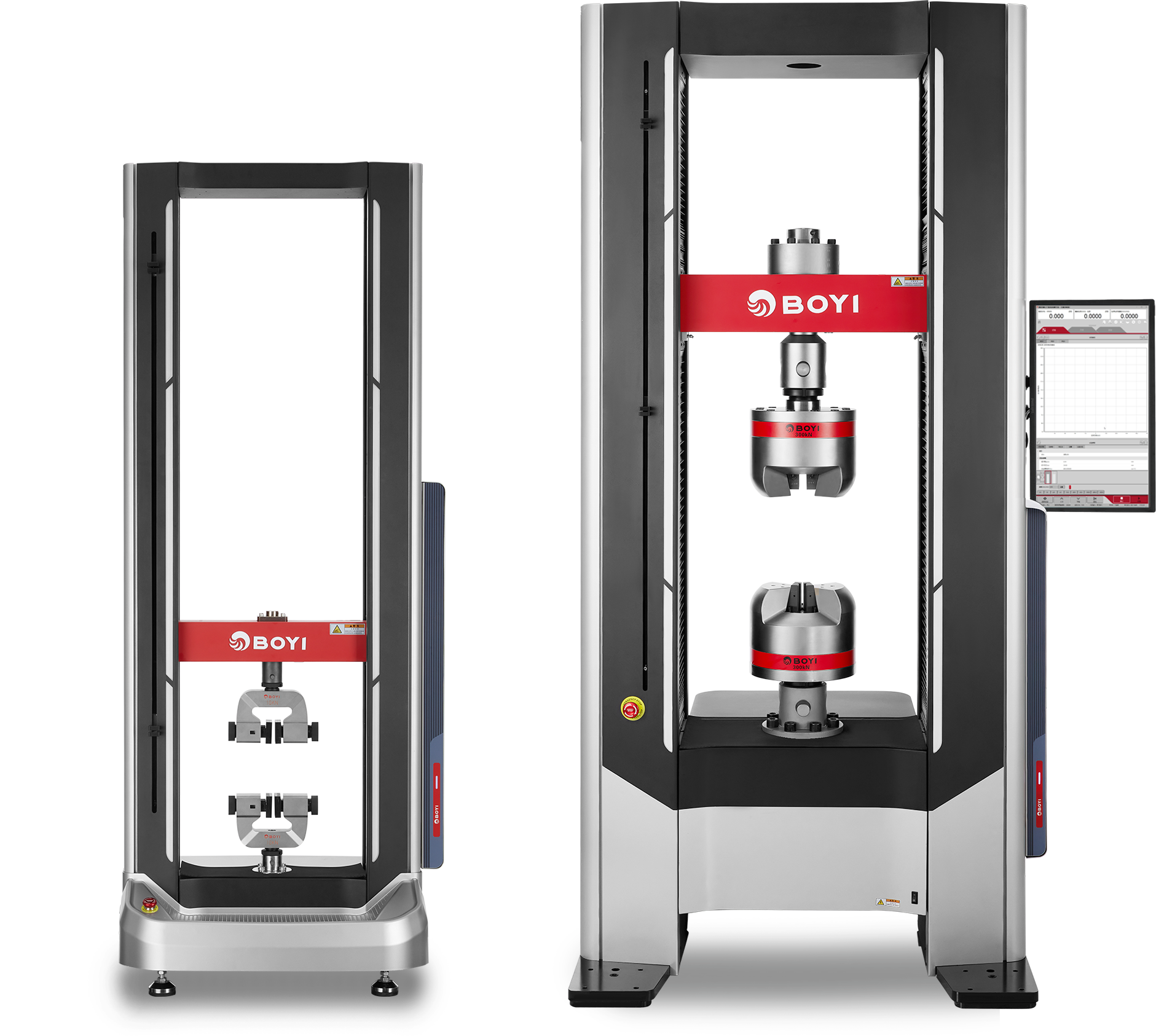
Using BOYI 2025-001 Electronic Universal Testing Machine and copper foil-specific fixtures to perform tensile tests on copper foil (Figure 2. Test system composition and close-up of fixtures and samples) with a crosshead displacement speed of 50 mm/min for fracture testing.

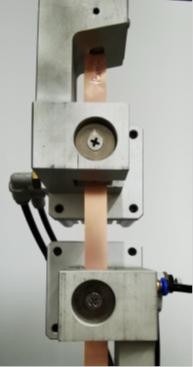
Figure 2. Test System Composition and Close-up of Fixtures and Samples
3. Results and Conclusion Groups
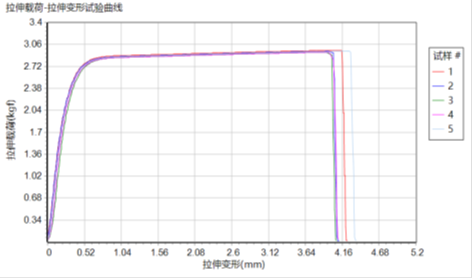
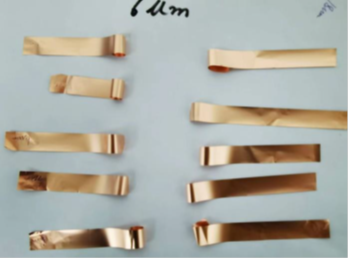
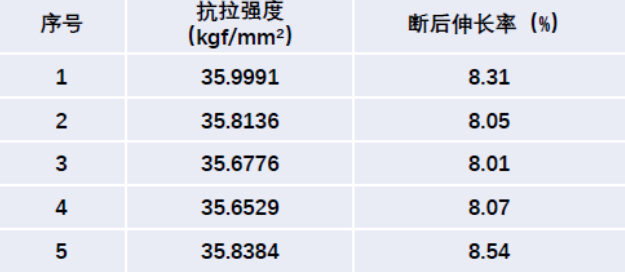
3.1 Test Results of Group 1: 6.1μm Copper Foil
3.2 Test Results of Group 2: 12μm Copper Foil
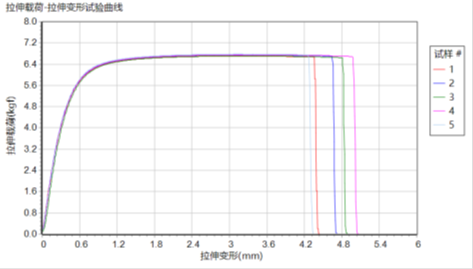
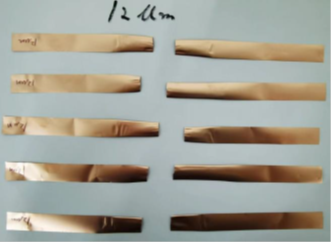
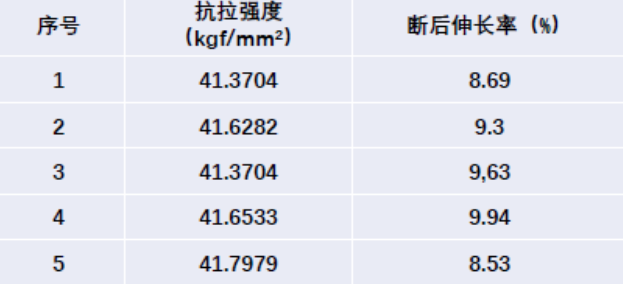
3.3 Test Results of Group 3: 13.8μm Copper Foil
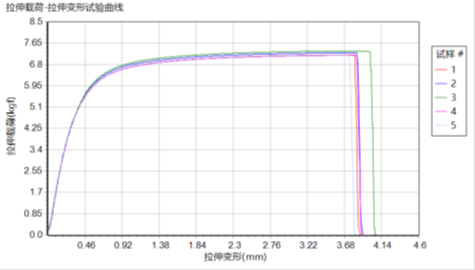
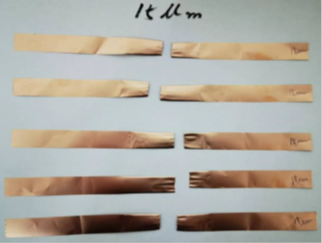
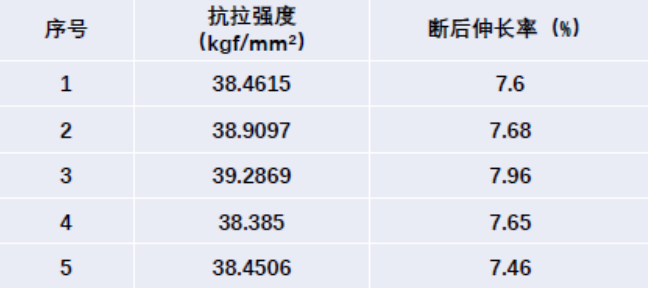
3.4 Test Results of Group 4: 16.8μm Copper Foil
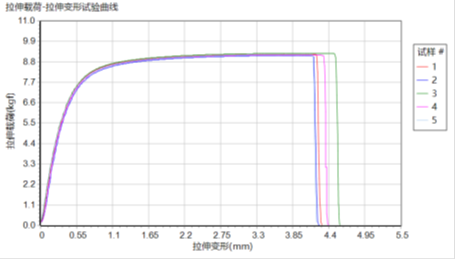
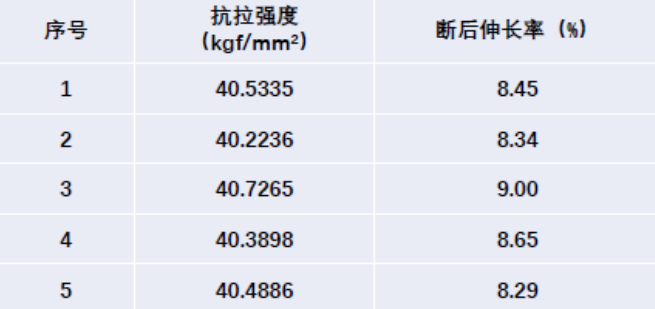
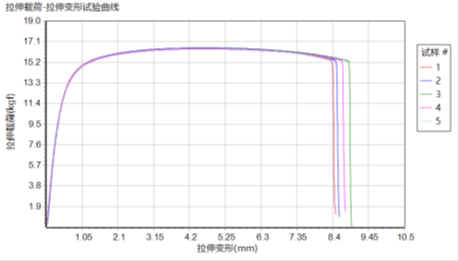
3.5 Test Results of Group 5: 31.2μm Copper Foil

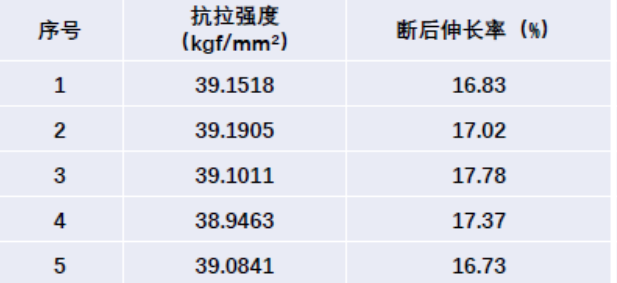
3.6 Test Results of Group 6: 64.8μm Copper Foil
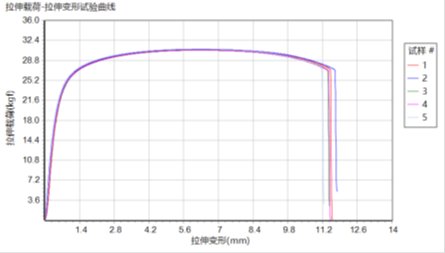
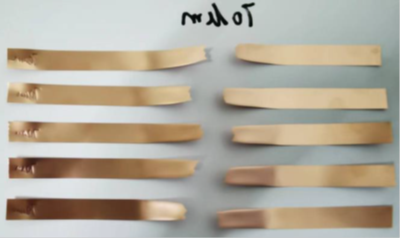
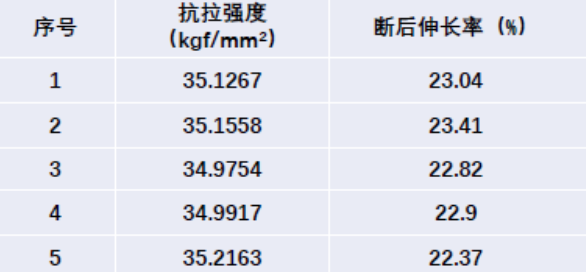
From these results, it can be seen that for the same material, the various data of the five samples in each group are relatively stable with little variation, indicating good uniformity of samples from the same batch and a stable and reliable testing system. The copper foil-specific fixture selected during the test is simple to operate and convenient to clamp. All samples fractured at the middle position, and all test results were qualified; without using an extensometer, the fracture elongation measured by beam displacement is stable and reliable, proving that the testing machine's beam displacement accuracy is high, with excellent reproducibility and stability.
4. Conclusion
In summary, using Kunpeng's electronic universal testing machine and 500N pneumatic foil-specific fixture can meet the standards "GB/T 5230-1995 Electrolytic Copper Foil Tensile Strength, Elastic Modulus, and Elongation at Break Test", "SJ/T 11483-2014 Electrolytic Copper Foil for Lithium-ion Batteries", "YB/T 4334-2013 Metal Foil Room Temperature Tensile Test Method", "GB/T 29847-2013 Test Methods for Copper Foil for Printed Circuit Boards" requirements, and can accurately and comprehensively measure various mechanical data of copper foil with stable and reliable data. This is very important for the technological development of the copper foil industry and the lithium battery industry, providing data support and technical assurance for copper foil product development, quality management, as well as standardization and normalization in the industry.
National Service Hotline
Company Headquarters: Room 102, Building 4, Autelang Technology Park, No. 68 Nanxiang 1st Road, Huangpu District, Guangzhou, Guangdong Province
Manufacturing Center: No. 299 Maofeng Road, Xukou Town, Wuzhong District, Suzhou City, Rizhongtian Industrial Park


SAF Coolest v1.2 设置面板 REGSX-ZFTZ-IVSSE-ZQD
无数据提示
Sorry, there is no content in this section currently!
You can view other sections or return Home
SVG图标库请自行添加图标,用div包起来,并命名使用
Welcome to the Testing Machine Configuration Assistance System!
Thank you for using this system.
Just answer a few questions about the test to create a test system suitable for you.
If you have multiple answers to a question, please choose the most important one.
If you have any matters to confirm, please click this button to contact us.
CONTACT US